
ISTANBUL CUISINE.
Twenty-seven centuries of a city's table, on today's table. Where the dishes come from, what the season brings and how we cook them: it's all here.
WHAT IS ISTANBUL CUISINE?
Istanbul cuisine isn't a recipe book; it's a city's memory. It belongs not to one nation but to one geography.
This city has been setting a table for twenty-seven centuries. Black Sea fish, Egyptian wheat, the ships of Venice and Genoa all came into Byzantium's harbours; on the slopes of Galata, people haggled in Italian. In the Ottoman palace kitchens hundreds of cooks kept the pots boiling, and those flavours made their way down from the palace to the mansion, and from the mansion to the neighbourhood.
Everyone lived in the neighbourhood. Armenians, Greeks, Jews, Circassians, Albanians, Kurds and Turks shared the same street; nobody finished their own meal without a ladle from the neighbour's pot. Pera's streets spoke French, Italian and German, and cooks, pastry chefs and brewers from every corner of the world passed behind the counters of its taverns, patisseries and beer halls.
The stalls of the Fish Market, the pier at Kumkapı, the spice smell of the Egyptian Bazaar, the market gardens of Yedikule… each put something into the same pot. That's how the cuisine of the world's most cosmopolitan city came to be: without anyone asking whose it was, as everyone's.
We don't ask either. It's this city's plate, that's all.
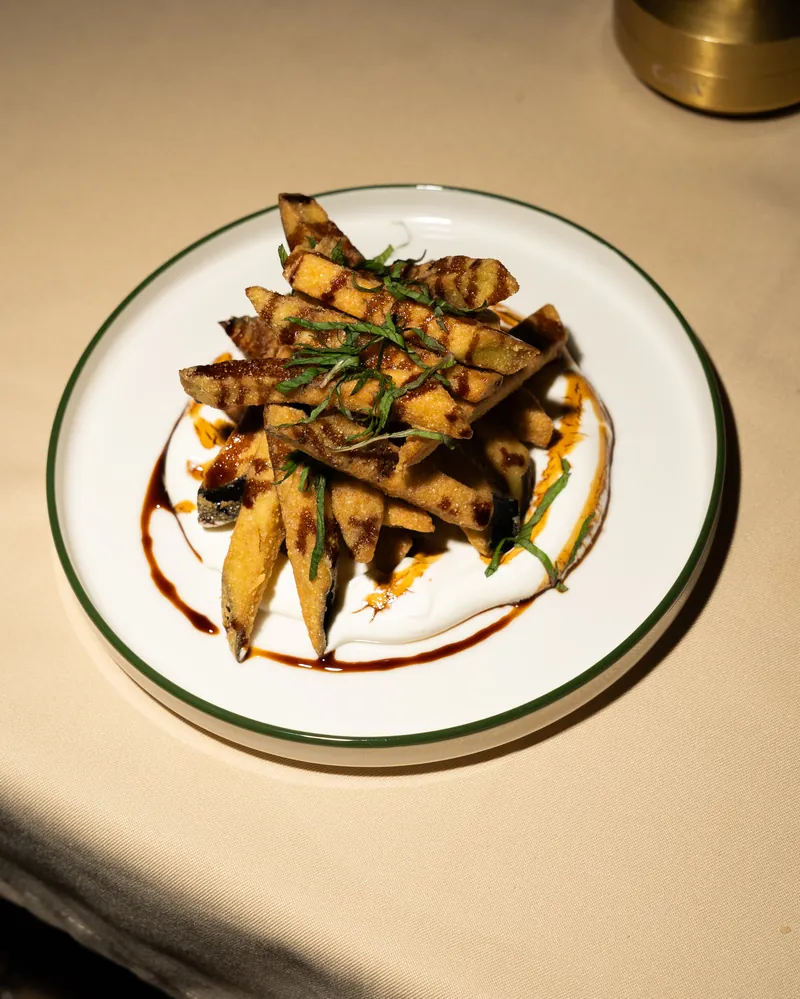
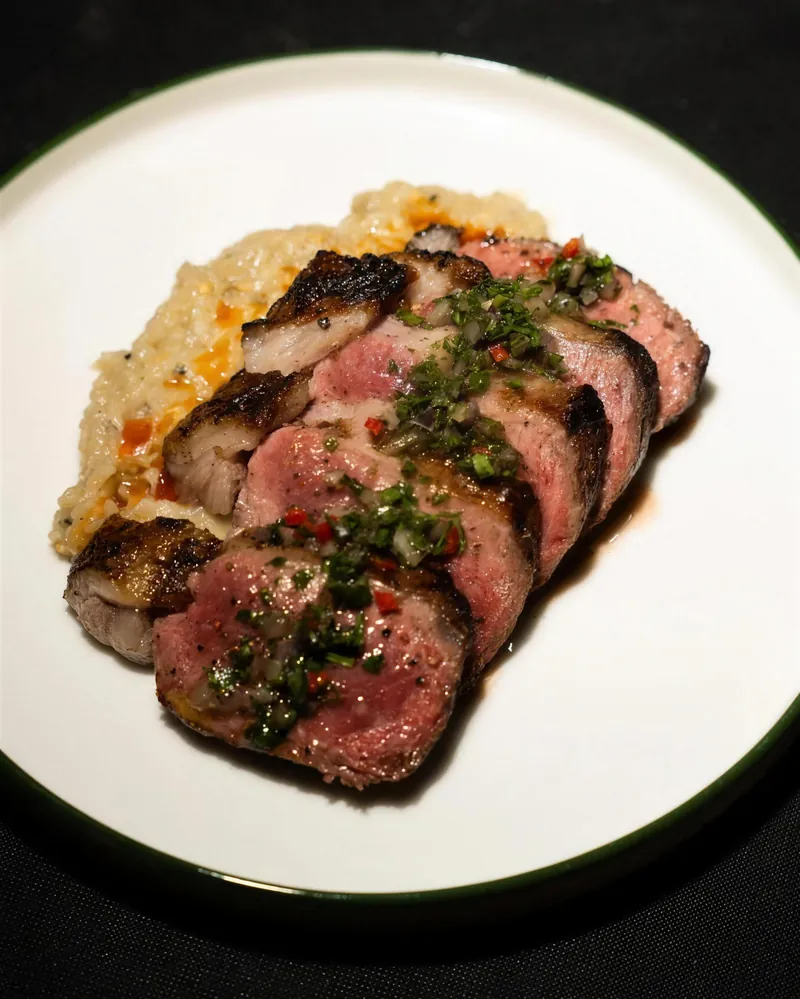
Over a hundred years these recipes were all but carved in stone. We don't kiss the stone; we read it. We fry aubergine and pair it with carob molasses; we set lamb karski on smoky aubergine beğendi with sour plum. We don't take the classic out of the display case and serve it as is; we take its soul and rebuild it for today's table.
Your grandmother would recognise these dishes. She'd just be a little surprised.
EIGHT RULES.
It's ordered ortaya.
Nobody in Istanbul hunches over their own plate. The middle of the table is everyone's; where the fork goes, the conversation follows.
Not carved in stone.
The soul of the classic stays, the mould bends. The dish is cooked today and speaks today's language.
Every dish has an address.
Salad from Yedikule, fish from the Fish Market, spices from the Egyptian Bazaar. In this city, food arrives district by district.
It looks at the market.
The menu follows the stall, not the calendar. When quince arrives it becomes dessert; when bonito arrives it becomes a plate.
It comes down from the terrace.
Mint, basil, ıtır. The bar's scent comes from upstairs, one flight down.
The plate doesn't pose.
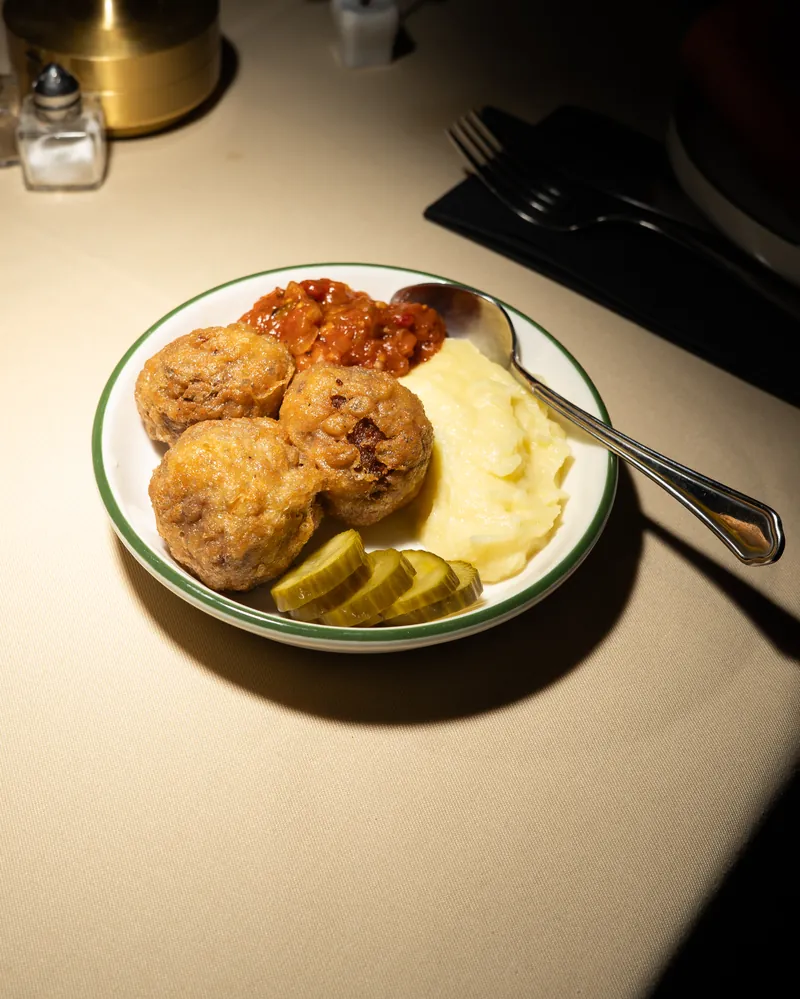
Take the photo, of course. But eat first, before it gets cold.
It doesn't rush you.
An Istanbul evening starts with the first plate and doesn't end with the last.
Everyone gets a seat.
Vegan, gluten-free, meat lover: all at the same table. Nobody checks labels here.
STORIES.
Istanbul's fish
Fish that pass through the Bosphorus, land on the counter and change their name as they grow.
- Lobi’s lakerda: from torik to the table
- Bonito changes its name as it grows coming soon
- The five names of bluefish coming soon
The story behind the dish
The name, the journey and our version of the dishes on the menu.
- Kadın Bıdı or kadınbudu? coming soon
- The priest in Papaz Yahnisi coming soon
- The sieve behind Kalburabastı coming soon
Recipes
Dishes to order ortaya at home; our measures, your table.
- Ada Ezmesi at home coming soon
- Leek Fritters coming soon
Season
The counter, month by month: what came, what went, what landed on the table.
- November at the market: quince, bonito, leeks coming soon
The city's history
Markets, ports, streets; a map of the table.
- Planning a Lobi evening in Asmalımescit
- How Kallavi Street got its name coming soon
Table guide
What to order, how to share, how many plates are enough.
SEASON.
Whatever's on the stall is on the plate. Fish follows the sea's calendar, vegetables and fruit follow the soil's; the two never land on the counter on the same day. What each season brings to Istanbul, and our kitchen's share:
FROM THE SEA.fish is eaten as it passes through the Bosphorus.
- Bonito, torik
- Bluefish: çinekop, sarıkanat
- Horse mackerel, striped red mullet
- Sardine, red mullet
- Anchovy
- Horse mackerel, whiting
- Turbot
- Grey mullet, gurnard
- Sea bass, red mullet
- Whiting, scorpionfish
- Swordfish
- In mid-April the nets come out of the sea.
- Gilthead bream, pandora
- Sardine
- Swordfish, amberjack
- Scorpionfish
FROM THE STALL.vegetables and fruit, on the soil's calendar.
- Quince, pomegranate, persimmon
- Mandarin, medlar, hawthorn
- Chestnut, walnut
- Pumpkin, cauliflower, celeriac, spinach
- Leek, celeriac, cauliflower
- Broccoli, black cabbage, red cabbage
- Spinach, nettle, wild golden thistle
- Orange, grapefruit, lemon, kumquat
- Artichoke, broad beans, peas
- Green garlic, spring onion
- Green almonds, wild asparagus, purslane
- Dill, mallow, chicory
- Aubergine, tomato, pepper
- Courgette, green beans, black-eyed beans
- Melon, watermelon, peach
- Sour cherry, apricot, mulberry, fig
Vegetables and fruit: Buğday Association, Seasonal Eating Calendar. One more rule for fish: if you see small fish on the counter, don't ask, don't buy.
HOW DO YOU EAT IT?
Cold
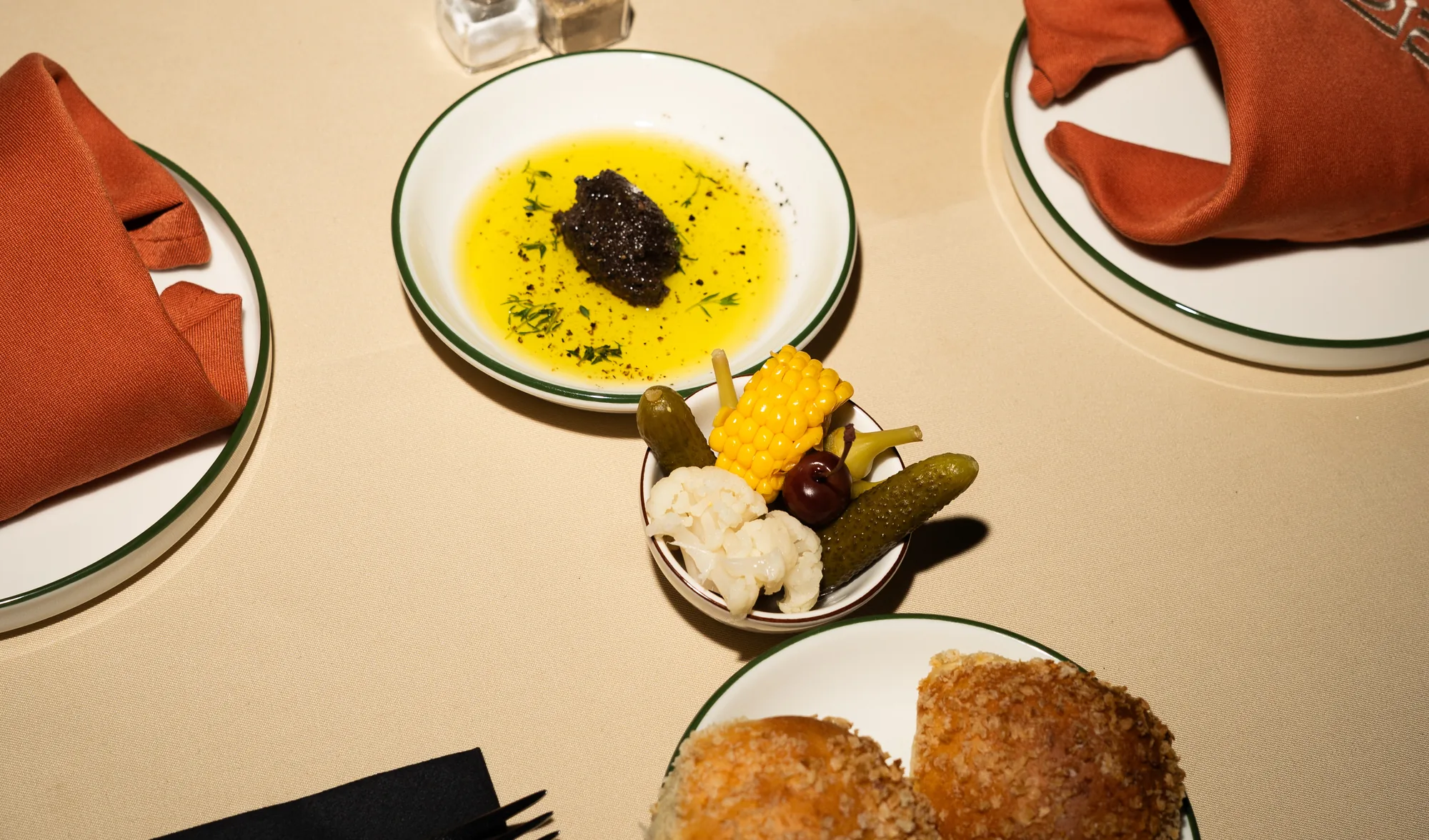
Ada Ezmesi, Havalı Enginar, Tarama. Start while the bread is warm.
Hot
Crispy Aubergine, Kokoreç, Leek Fritters. In the middle, a fork for everyone.
Main
Papaz Yahnisi, Lamb Karski or the fish of the season. One is enough; two is better.
Dessert
Kalburabastı or Quince Dessert. Even the one who says "I'm full" reaches over once.
FREQUENTLY ASKED.
What is Istanbul cuisine?
A cuisine that belongs to a city rather than a nation. It was born in the markets, the ports and the kitchens of the communities that lived side by side here: meze, olive-oil dishes, fish, offal, stews and syrup-soaked desserts. At Lobi we cook these dishes in today's language, at a table where everything is ordered ortaya.
How is it different from Ottoman cuisine?
The Ottoman palace kitchen is an important source of Istanbul cuisine, but not all of it. Istanbul cuisine is the kitchen of the neighbourhood, the bazaar, the meyhane and the pier as much as the palace.
Does the menu change with the seasons?
Yes. Bonito, quince, artichoke and the like come in season and give way to something else when it ends.
Are there vegetarian, vegan and gluten-free options?
Yes. Vegan and vegetarian dishes are marked on the menu and allergens are listed next to every dish.
Do you share your recipes?
Yes; the Recipes series has home versions.
Where can I taste Istanbul cuisine?
In Asmalımescit, at Balyoz Sokak 11/A. Tuesday to Sunday from 17.00.